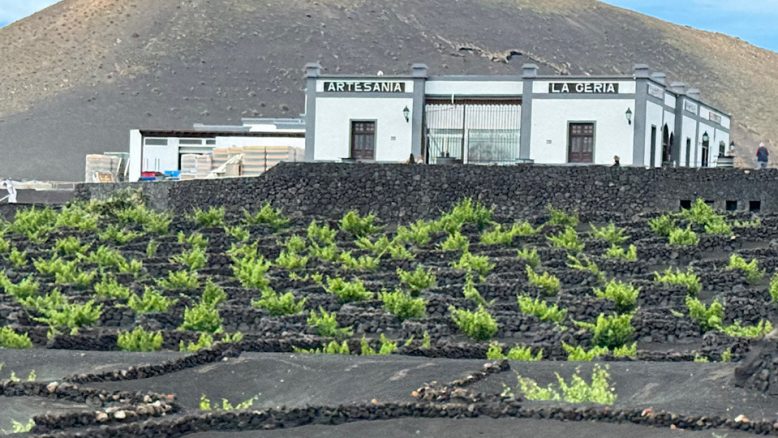
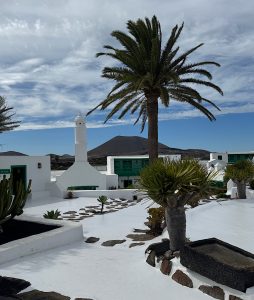
The landscapes and building profiles of the volcanic island of Lanzarote are constrained by a communal commitment to development of a greener community. There are some unusual construction guidelines that limit buildings to two stories, all exteriors painted white, trim for farming families green, for fishing waves workers blue and all others a natural wood tone brown. The whitewashed buildings emerging from the black lava sands creates a chessboard contrast. The silhouettes of trees and buildings populate the Atlantic Ocean felt board with bare barrenness.
White painted concrete floors are broken by any vegetation brave enough to survive the heat and drought.
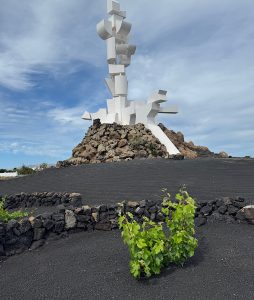
In the geographical center of the island a sculpture dedicated to the farmers of Lanzarote is made from painted water tanks and other items taken from ships and assembled by artist Jesus Soto in 1968. The sculpture is 15 metres tall and is built on a mound of stones historically said to be unaffected by volcanic activity. In the foreground the Malvasia grape is growing while mulched into a hollow of black volcanic ash (picon). The grape grows close to the ground without trellis or support and avoids diseases often associated with ground grown vines.
The gathered stone walls shelter the vines from the prevailing Atlantic winds and concentrates the humidity for the roots. The island is a barren boiling volcano. The ash, rocks and porous sandstones create a moonscape that is both barren and miraculously alive. The farmer is at the heart of all livelihood. We saw goat herds, papaya trees, avocados and corn dwarfed by the trade winds.
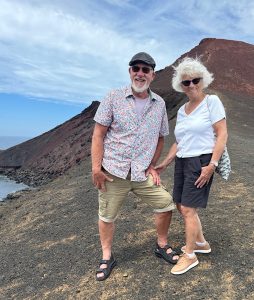
The death grip on my wrist is fear and experience. The ground is a sandy pelletized ash that sends everything rolling down cliff to the Atlantic. The winds push us along. Yet in this island that has often opposed visitation we discovered a keen willingness to merge barrenness with fertility. The sculpture at the centre of the island is dedicated to fertility. The black and white landscape is punctuated with green!