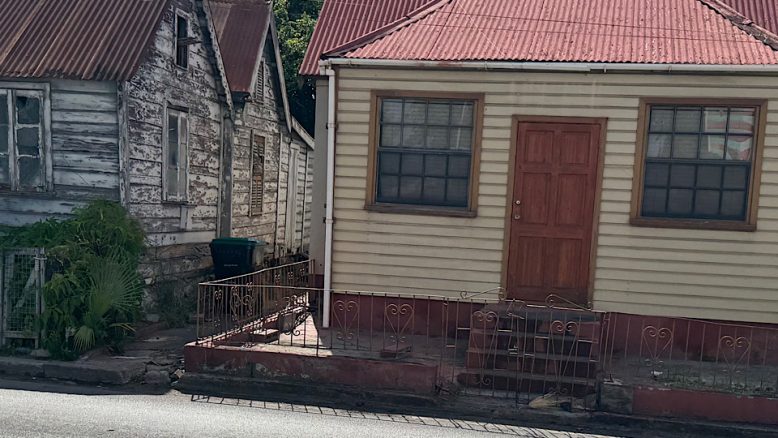
The few remaining chattel houses in Barbados stand as witness to and evidence of a newly acquired freedom for the enslaved people. The freed slaves did not own the land — it was leased to them in lieu of wages. Landowners were known to terminate the employment so the farm workers and their houses were often on the move with its resident and family to a new employer. Wooden houses are hard to maintain and the often used soft Canadian Pine became very attractive to termites. Holy houses.
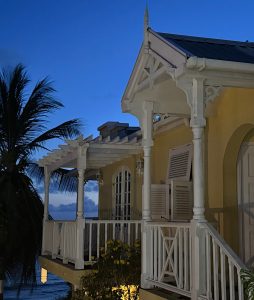
Later housing with filigree woodwork framing the soffits, became a desirable post plantation style in the development of tourist destinations. Food, sun and water anchor the attraction.
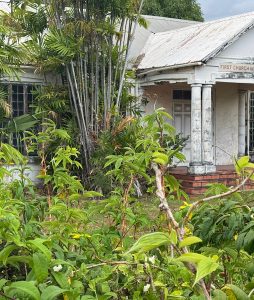
Older housing is rapidly being over grown by native vegetation. Stumps and vines blend with moss, termites and mold to return these passion palaces to dust.
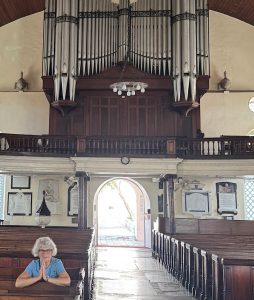
At the terminus of the number 11 bus in Bridgetown there is an Anglican Church —the pipes tower over the gathered from the balcony. A hint of British Anglicanism that arrived on the island. A house of worship for a God who understood slavery every step of the way. The termites of theology and the raids of history have returned this into a holy house.